
Why Sales and Support Teams Struggle to Perform
Sales and support teams don’t struggle because they lack information. They struggle because real conversations rarely follow a script. A sales rep may know the product well. A support agent may understand every policy. But when a customer pushes back, asks an unexpected question, or shifts the conversation, knowledge alone is not enough.
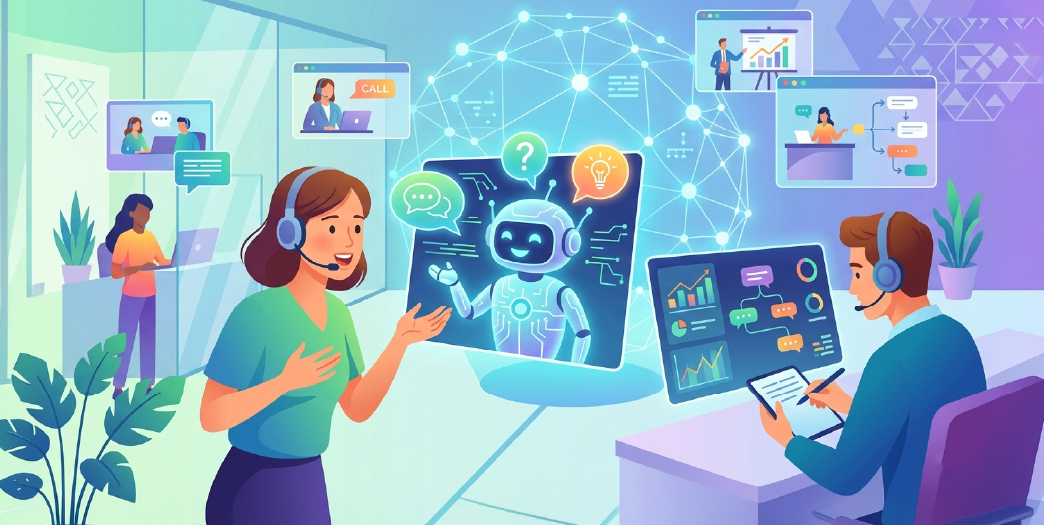
This is exactly the gap PersonaTrain is designed to close. It turns SOPs, product guides, FAQs, and training materials into realistic AI-driven role-play simulations — so teams can practice conversations before they face customers.
Nearly 70% of employees say training doesn’t translate into real-world performance. For sales and support teams, that directly impacts revenue, customer satisfaction, and retention.
Why Traditional Sales and Support Training Fails
Most enterprise training still focuses on content delivery. Teams sit through product sessions, review scripts, and complete modules. Sometimes they participate in role-play, but it is often limited, inconsistent, and difficult to scale.
The result is predictable. Teams know what to say, but they’re not ready for how conversations actually unfold. Sales reps struggle when objections don’t match the script. Support agents hesitate when emotions enter the conversation.
The issue isn’t a lack of knowledge — it’s practice in real situations. AI role-play addresses this by making practice continuous, repeatable, and available on demand.
Passive Learning vs. Active Learning for Conversation Skills
Why Passive Learning Doesn’t Build Conversation Skills
Passive learning formats — slides, videos, quizzes — are useful for introducing concepts, but they don’t prepare people for live conversations. Reading about objection handling is not the same as responding to one in real time. These formats lack unpredictability. They don’t force the learner to make decisions under pressure, which is where real skill develops.
How Active Role-Play Builds Confidence and Decision-Making
Active practice changes that dynamic. When learners engage in role-play simulations, they are required to respond, adapt, and think through the situation. The conversation evolves based on their input, which makes the experience far more realistic.
PersonaTrain enables this through adaptive role-play, where each interaction responds to the learner’s choices, skill level, and scenario objectives. That is what helps move from knowing to doing.
Why Contextual Training Improves Sales and Support Outcomes
Generic Training Content vs. Real Business Context
One of the biggest limitations of traditional training is the lack of context. Generic scenarios rarely reflect the complexity of real customer interactions. A pricing discussion varies across industries. A support escalation depends on product type, urgency, and customer expectations.
PersonaTrain addresses this by allowing teams to upload their own materials — SOPs, policies, product documentation, FAQs — which are then converted into realistic simulations that reflect the actual work environment.
Training That Mirrors Real Customer Conversations
When training reflects real situations, learners recognize patterns faster. They respond with more clarity and confidence because they’ve already practiced similar interactions. This reduces hesitation and improves consistency, especially in high-volume sales and support environments.
How PersonaTrain Works for Sales and Support
PersonaTrain is built as a multi-agent AI system that creates dynamic, evolving conversations rather than static scripts. The learner’s responses influence how the conversation progresses, making the experience much closer to an actual customer interaction.
AI Personas That Reflect Real Buyer and User Behavior
Different customers behave differently, and training should reflect that. Some buyers focus on price. Others care about implementation or ROI. Some support customers are calm, while others are frustrated or impatient. PersonaTrain allows teams to configure personas with different tones, behaviors, and objectives — creating the variability critical for real-world preparation.
Multi-Channel Practice Across Voice, Chat, and Video
Sales and support conversations don’t happen in a single format. Teams interact with customers across chat, calls, and virtual meetings. PersonaTrain supports text, voice, and video-based simulations, along with Microsoft Teams integration — ensuring practice aligns with actual communication channels.
Key Features That Set PersonaTrain Apart
No-code scenario creation. Training teams can define personas, conversation objectives, difficulty levels, and knowledge boundaries without technical support. This allows faster iteration and keeps training aligned with changing business needs.
Real-time feedback and skill evaluation. PersonaTrain provides live behavioral feedback during interactions and tracks performance across multiple dimensions — decision quality, conversation outcomes, and skill progression.
Enterprise knowledge converted to simulations. Instead of building scenarios from scratch, teams upload documents and instantly create simulations. Training stays relevant, accurate, and aligned with business operations.
Business Impact for Sales and Support Teams
Improved Sales Conversations and Faster Ramp-Up
Sales teams benefit from repeated exposure to real scenarios. Practicing discovery calls, demos, and objection handling helps reps respond with more clarity and confidence — reducing ramp time and improving overall effectiveness. Simulation-based training can significantly accelerate time-to-competency and improve performance outcomes.
Better Customer Support Quality and Consistency
Support teams gain from practicing real-world situations before handling live cases. This improves response quality, emotional handling, and consistency across teams — reducing hesitation and enabling agents to respond more effectively under pressure.
Scalable Training Across Enterprise Teams
PersonaTrain supports LMS integration, web and mobile access, and Microsoft Teams integration — ensuring training is accessible across distributed teams without compromising quality or consistency.
Best Practices for Getting Started
Start with high-impact scenarios. In sales, focus on discovery calls and objection handling. In support, prioritize escalations and troubleshooting — the conversations that directly drive outcomes.
Use real business content. Uploading actual product documents, policies, and FAQs ensures simulations reflect real scenarios, improving both relevance and effectiveness.
Build progressive skill development. Start with simpler scenarios and gradually increase complexity. Adaptive simulations let learners build confidence while continuously improving.
Sales and support performance depends on more than knowledge. It depends on how well teams handle real conversations. PersonaTrain bridges that gap by turning enterprise knowledge into adaptive simulations, enabling continuous practice, and providing measurable insights into performance.
Book a PersonaTrain demo to see how AI-powered role-play can transform your sales and customer support training, or explore how we process your documents.